
How Espresso Trained Me
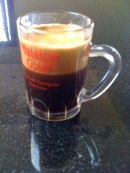 In 2003 I found myself in the job market (not by choice) and rethinking my career options. I decided to take my passion for coffee up a notch and learn about roasting, espresso preparation, and small retail business. At the end of the day I decided to stay an IT guy, but I became significantly more caffeinated in the process. I’ve also learned a few things along the way. I’ve never been much of a “detail” guy and even less of a process/measurement type of person. To me details have always been boring and the idea of measuring things to improve was about as motivating as a poke in the eye. Comically what I found on the journey to the perfect espresso shot was a path of details and refinement – and some unexpected tools.
Background : Espresso is a small thick dose of coffee made by passing near boiling water through finely ground coffee under pressure. The flavors you find in the cup (or shot) are very concentrated. Some people like it; some people ruin it by creating Pumpkin Spice Lattes (just kidding). In case you are interested, a double shot of espresso in your latte typically has less caffeine than the average cup of coffee (2 ounce shot in 12 oz Latte ~ 100mg , 12 ounce coffee ~ 200mg <varies>).
 So how do you know if the Espresso you make is “great” if you are diluting it with milk? You don’t – you drink it straight or diluted in several ounces of hot water (called an Americano). My first shots were light colored and bitter (not good bitter, spit-it-out-fast bitter). After practice, I got something that was decent and made espresso drinks for friends and family that were pretty good.
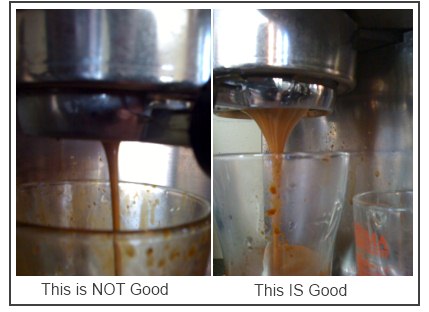
Several months later, I went to the National Coffee Association show in Chicago to see the latest coffee happenings and take some training. In the vendor hall checking out equipment a guy pours me an espresso with a new kind of portafilter (the thing the coffee goes in) that has NO spout on the bottom (called a bottomless portafilter). See the difference?
I was mesmerized with the soft-serve ice-cream like flow of the coffee from this new device. The barista called it “naked extraction” because you can see the whole process. The spout hides important details about how even the tamp was and the thickness of the liquid.
Can you say Christmas gift? Christmas morning I start with my new filter – waiting to see my new amazing espresso pour out. What do I get? I get coffee shooting out in different directions making a MESS. Maybe my espresso isn’t as great as I thought?
Remember, I’m not a detail guy so at this point I’m thinking, “too much work, put it in the trash”. Instead, I went back to my technique of grind, tamping, etc. and carefully taking notes on the results. I tried quite a few times (more than pride will allow me to mention) before I got it down. You can see the difference below, and boy could you taste it.
 Now I was quite perplexed. Behind this little spout was hidden all information I needed to make “perfect” espresso. So for years I’d brushed off measurement and analysis and now through a very simple example I saw the beauty of improving through measured observations. I’ve since applied this new appreciation to my roasting of espresso beans – a longtime frustration, and achieved great results.
So I learned in some small things (but important to me) the value of measuring, tracking, and getting feedback. I’m still learning on how to apply that to my work. Unfortunately, I’m the type that has to see the value in something before I have any motivation to even entertain doing it. Going forward I’m going to tackle new things by simplifying them and trying them in a way more relevant to me.
I see a lot of crazy metrics to measure things in the workplace, I’m not always sure they are meaningful – as a matter of fact most of them make me cringe. I’ll try not to let that deter me in the future from finding that valuable raw data to improve.
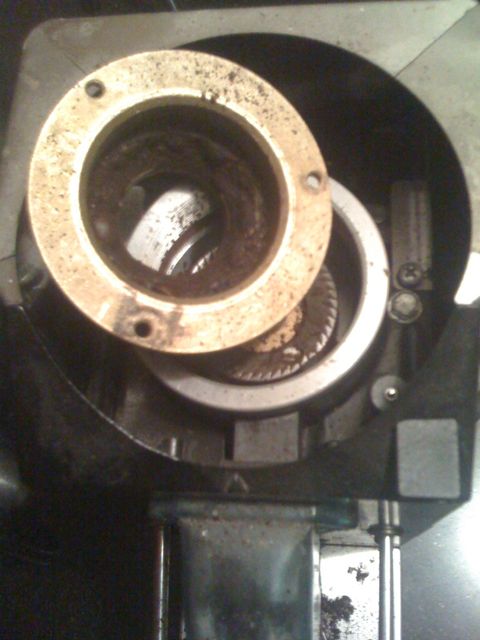 I unscrewed the plate that holds the hopper and unthreaded the top burr. Yup, a 1/4 inch of yucky oils and residue. I got it all clean and cleaned the small cavities around the bottom burr. Fixed right? Nope, another dead end. Time to clean the machine.
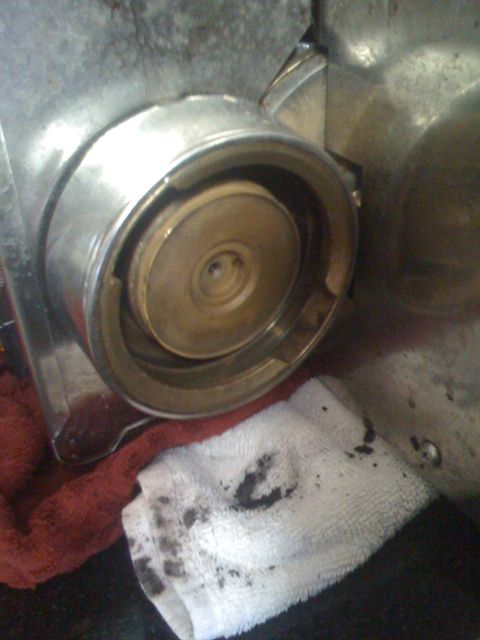 After emptying the machine and turning it on the side I wrestle out the gasket. Prying it out from the innermost part seemed to be the trick. To say there was a lot of oil and burnt reside in this area would have been an understatement. After removing it I used a standard espresso cleaning brush to get every corner of that brass brew head clean. Putting the new gasket in was simply, insert smooth side down and push. Next I backflush. I first put the knobby part of this rubber stopper down into the spout (made sense to me) but it didn’t seal, upside down did the trick. I flushed it several times and let it sit for a bit, then cleaned it out and backflushed again with water. After putting it all back together I pulled a couple shots with old beans.